Valrhona in Deep Space: How Chocolate Joined the Artemis II Mission
There are brand milestones, and then there are moonshots.
Today, Valrhona chocolate is part of one of the most ambitious human exploration programs of the 21st century. Through Astreas Performance Truffles, crafted with Valrhona chocolate by Cercle V Member Recchiuti and produced with the support of Dany Kamkhagi of Mostly Chocolate, Valrhona is now aboard NASA’s Artemis II mission, the first crewed Artemis flight, and the first time humans have departed Earth orbit since Apollo 17 in 1972. Artemis II launched on April 1, 2026, with a crew of four on an approximately 10-day journey around the Moon. NASA describes it as a critical step toward a sustained return to the Moon and future missions to Mars.
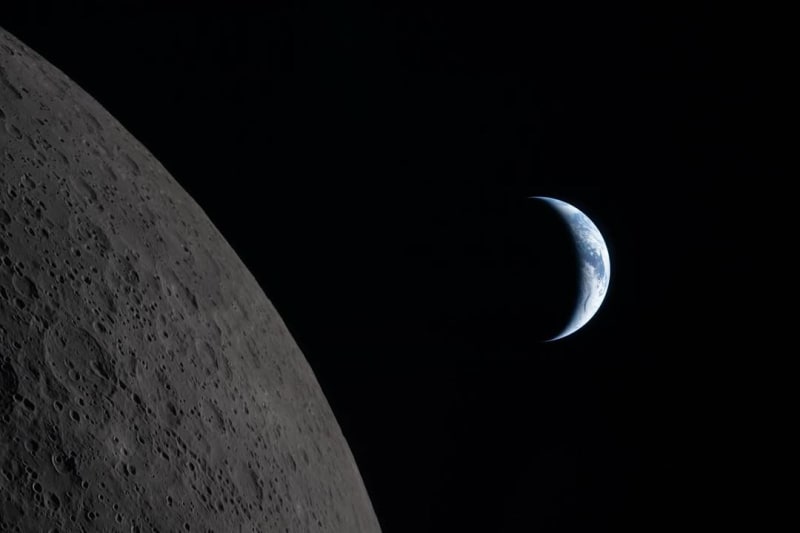
For Astreas, this follows earlier space milestones: the product has already flown on Virgin Galactic and has been enjoyed by astronauts aboard the International Space Station. Astreas describes this latest step as the journey of the “first chocolate truffle in lunar orbit,” underscoring its ambition to merge luxury chocolate with performance nutrition for extreme environments.

That alone would make a compelling story. But the deeper story is even more interesting.
Because this is not just about chocolate going to space. It is about what happens when craft meets constraint, when pleasure meets performance, and when pastry begins to engage more seriously with the questions shaping the future of food.
Astreas: when pleasure meets performance
Astreas positions itself as a new kind of functional chocolate: one designed not only to delight, but also to support focus, endurance, and cognitive performance. Each planet-shaped sphere is formulated with ingredients such as citicoline, L-theanine, and natural caffeine, with the goal of delivering smoother, steadier energy and mental clarity. Astreas frames the concept as a “daily chocolate ritual” built around both multisensory pleasure and high performance.

That positioning matters.
For years, functional food often lived in a separate universe from fine pastry and chocolate: more lab than atelier, more utility than desire. Astreas challenges that divide. Its proposition is not that performance should replace indulgence, but that indulgence itself can evolve: more intentional, more technically informed, more aligned with the way high-performing consumers increasingly want to eat.
That conversation feels especially relevant for pastry professionals today. Consumers are still seeking pleasure, but they are also asking more from it: better ingredient quality, more thoughtful formulation, cleaner energy, lower sugar, and products that fit their lifestyle. In that sense, space is not as far from the pastry case as it first appears.
What is Artemis II and Why it Matters
Artemis II is a hinge moment: the first crewed Artemis mission, built to validate the systems astronauts will rely on for future deep-space exploration. It is the first mission with crew aboard both the Space Launch System (SLS) rocket and the Orion spacecraft, and it is intended to demonstrate capabilities needed for missions beyond low Earth orbit. Artemis II carries astronauts farther from Earth and closer to the Moon than any human mission in more than half a century , laying the foundation for future lunar surface missions and, eventually, Mars.
That is what makes the symbolism so powerful.
Since Apollo, humanity’s relationship with the Moon has existed mostly through memory, cinema, and ambition. Artemis turns that ambition back into infrastructure. It is not nostalgia; it is the reopening of a frontier. If Apollo was the era of flags and footprints, Artemis is about systems, sustainability, and continuity: how to live, work, perform, and remain healthy farther from Earth, for longer.
And that is exactly where food enters the frame.
In deep space, nutrition is never secondary
Adequate nutrition is essential to astronaut health, performance, and mission success. Food for spaceflight must be not only safe and nutritious, but also acceptable, long-lasting, easy to prepare, and varied enough to avoid menu fatigue: especially as missions become longer and resupply becomes more limited. NASA’s research also emphasizes that food and nutrition influence not only physical health, but cognitive and behavioral outcomes as well.
That shifts food from comfort item to operational system.
In space, a snack is not trivial. It is tied to alertness, morale, endurance and consistency. Astronauts are operating in an environment defined by confinement, radiation exposure, altered physiology, and extreme logistical limits. In that context, compact, stable, nutrient-dense foods with strong sensory appeal are not luxuries. They are part of performance architecture.
For the pastry and chocolate world, that is a fascinating lens. It invites professionals to think not only about flavor, texture, and emotion, but also about portability, shelf stability, precision, and function, without abandoning excellence.
Our partners behind this mission
One of the most compelling aspects of this story is that it brings together two Valrhona clients, each contributing a distinct kind of expertise to a highly ambitious project.
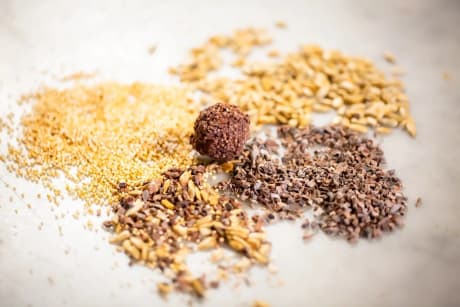
At the heart of Astreas is Michael Recchiuti, founder of Recchiuti Confections and one of the most respected names in American fine chocolate. For decades, Michael has built his work around craftsmanship, precision, and a deep respect for ingredients: creating confections that are both technically exacting and emotionally resonant. That approach made him a natural partner for Astreas: a project that required not only exceptional flavor, but also the ability to translate a complex functional brief into a truly luxurious chocolate experience. In Astreas, Michael’s role was essential in shaping the sensory identity of the product, ensuring that performance did not come at the expense of pleasure.
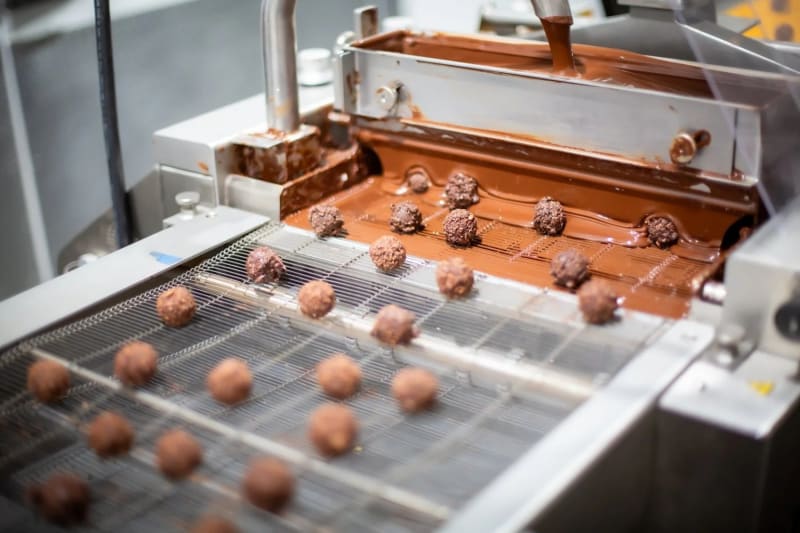
Alongside that creative foundation, Mostly Chocolate played a critical role in bringing the concept into production. Based in Houston, the company provided the technical and operational backbone needed to transform a bold idea into a viable product. Under the leadership of Dany Kamkhagi, Head of Production & Innovation, Mostly Chocolate helped bridge the gap between formulation, manufacturability, and consistency.

Together, Recchiuti Confections and Mostly Chocolate represent two complementary expressions of excellence within the Valrhona community. It also says something important about Valrhona’s ecosystem: our chocolate is trusted by professionals working at the edge of possibility.
Why Valrhona belongs in this conversation
There is a reason Valrhona feels native to a project like Astreas.
When a product is being built for a mission-defined environment, every variable matters: flavor clarity, texture, consistency, behavior in formulation, and trust in the ingredient itself. Functional products already ask a lot of the palate. To still deliver real pleasure under those conditions, the chocolate has to carry more than cocoa notes: it has to be the sensory anchor of the product.
That is where fine chocolate matters.
For Valrhona, this story reinforces something professionals already understand intuitively: premium chocolate is not just about luxury signaling. It is a technical and creative tool that helps products perform: organoleptically, emotionally, and commercially.
Beyond the anecdote: what this says about the future of pastry
As consumers become more informed, pastry is entering a new era: one in which indulgence is still central, but not necessarily sufficient on its own. Texture still matters. Beauty still matters. But so do macros, function, energy profile, ingredient lists, satiety, and cognitive benefit. The category is moving toward something more layered: pleasure with purpose.
That is precisely why this story aligns so naturally with Valrhona’s broader philosophy of Reasoned Indulgence.
The future of pastry is not joyless optimization, and it is not nostalgic excess either. It is smarter formulation. Better choices. Higher standards. Greater intentionality. Products that respect both desire and reality. Products that understand that today’s consumer may want the emotional charge of a truffle and the focus support of a pre-performance ritual in the same bite.
In that sense, Astreas is not a curiosity from the aerospace world. It is a signal.
It suggests a future where pastry borrows ideas from sports nutrition, neuroscience, medicine, and extreme-environment food systems; while still insisting on taste, elegance, and craft. A future where the pastry chef is not only an artisan, but a designer of modern rituals.
The road ahead
Artemis III is currently planned for 2027 and is intended to return humans to the lunar surface near the Moon’s south pole for the first time in more than 50 years.
Today, Valrhona is aboard a mission around the Moon. And if the arc of Artemis continues, the idea that fine chocolate could one day be part of life on or around the lunar surface no longer sounds like science fiction. This is the kind of story that reminds us what our industry can be at its best: rigorous, imaginative, collaborative, and unafraid of altitude.
Valrhona has always believed that pastry is a field of excellence.